
Web scraping looks ridiculously easy when you start small. You fire off a few requests against a friendly target, parse some HTML, and call it done. No blocking systems kick in at low volume. Dynamic content doesn’t matter when you’re testing against static pages. This creates a dangerous illusion that your setup works, when really it just hasn’t faced resistance yet.
Production flips the script entirely. Anti-bot systems fingerprint your traffic within minutes and start serving CAPTCHAs or blank pages. JavaScript-heavy sites refuse to render without real browser engines running behind the scenes. At scale, minor inefficiencies turn into full-outages without warning. This article isn’t another list of popular scraping APIs based on brand recognition or funding rounds. Every solution here earned inclusion through demonstrated stability under real production workloads.
Top 5 Web Scraping APIs That Actually Work in Production
This list ignores marketing claims and focuses strictly on production behavior. Stability under load matters more than feature count. Automation depth determines whether your team sleeps through the night or wakes up to broken pipelines.
Each tool below handles blocking, scaling, and data extraction differently. The right choice depends entirely on what you’re scraping and what your team can realistically manage.
1. HasData
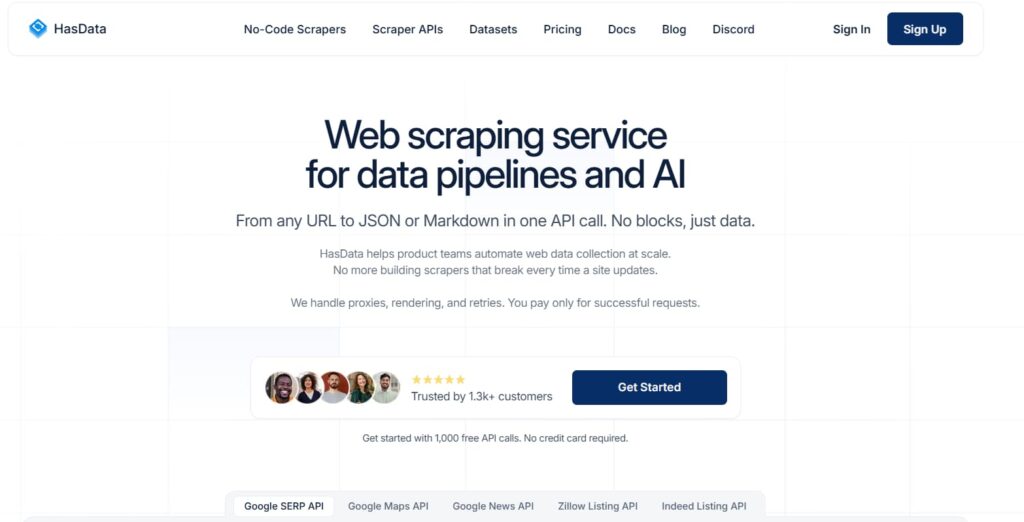
HasData Web Scraping API is built around large-scale scraping through a single endpoint that abstracts away the entire infrastructure layer. You don’t manage proxies, rendering engines, or anti-bot countermeasures separately. The system handles these concerns internally and returns clean data without requiring constant manual intervention from engineering teams. A system that fails intermittently creates operational debt that compounds faster than most teams expect.
HasData positions itself for environments where scraping must work consistently without dedicated maintenance cycles. The unified approach reduces the number of failure points that typically plague multi-component scraping setups. This matters when scraping moves from occasional experiments to production dependency, where downtime carries real costs.
How It Handles Production Workloads
Infrastructure determines scraping success more than clever code at any reasonable scale. Proxies get blocked without rotation strategies. JavaScript content won’t render without browser engines. Anti-bot systems detect patterns across thousands of requests that looked innocent in small tests. A unified API that handles these problems internally prevents the need to manage separate services.
The platform covers the full scraping workflow through:
- Single API request for large-scale data collection;
- Automatic proxy rotation across IP types;
- Bypass of anti-bot protections;
- JavaScript rendering for dynamic content;
- AI-based data extraction without selectors;
- Batch scraping and page interactions.
This approach removes the need to build and maintain custom scraping infrastructure. Teams focus on using data rather than fighting infrastructure fires.
Where It Fits Best
HasData suits projects with continuous scraping pipelines facing aggressive blocking from target websites. Teams that need structured data without building internal tooling will find the unified approach practical. It fits production environments where scraping must work consistently without engineering teams dedicating cycles to maintenance and troubleshooting.
2. Rayobyte
Rayobyte focuses on an infrastructure-first approach to web scraping with heavy emphasis on proxy quality and granular control over request behavior. Their platform provides more configuration levers than simplified alternatives. This control comes at a cost: teams need enough technical expertise to manage that complexity effectively without shooting themselves in the foot.
The tradeoff makes sense for organizations where custom scraping logic requires precise targeting, specific geographic IP distribution, or unusual request patterns that black-box APIs struggle to accommodate. Rayobyte suits environments where flexibility matters more than ease of deployment.
Infrastructure and Control Layer
Proxy quality determines scraping success rates more than any other single variable. Bad IPs get blocked instantly on defended targets regardless of how elegant your request logic looks. Granular control over request parameters, session management, and targeting lets teams optimize for specific websites rather than accepting generic configurations that work inconsistently.
Rayobyte provides infrastructure depth through:
- Large proxy network;
- Custom targeting options;
- Control over request behavior;
- Scalable scraping support.
This flexibility requires experience to wield effectively. Teams without dedicated scraping expertise may find simpler alternatives more practical.
Best Use Cases
Rayobyte fits technical teams with scraping experience who need infrastructure control rather than turnkey solutions. Custom scraping scenarios where standard API abstractions limit performance will benefit from this granular approach. Organizations running mature data pipelines with in-house expertise get the most value.
3. SerpApi
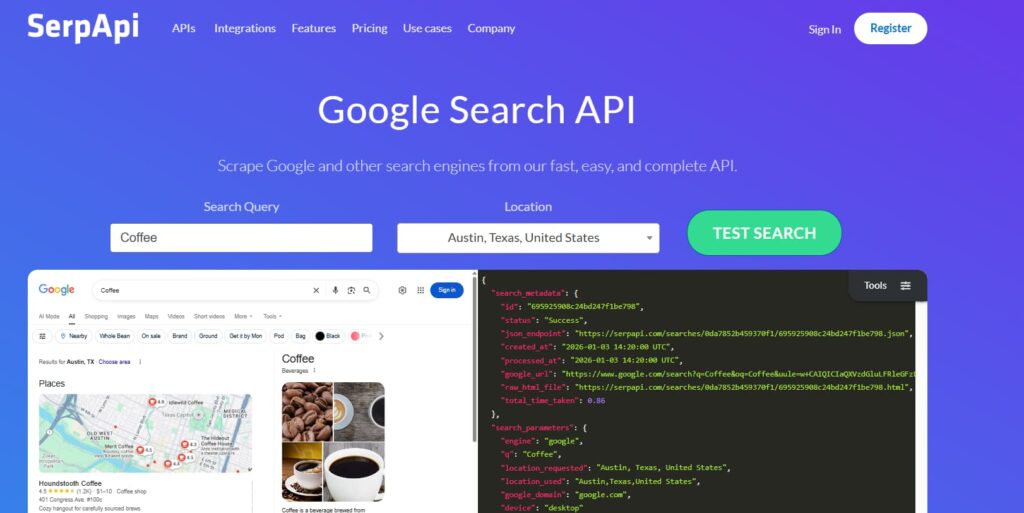
SerpApi focuses specifically on returning structured data without requiring users to build or maintain parsing logic. Their platform specializes in search engine results but the philosophy extends across their API design. You request data. You get back clean JSON. No custom selectors, no fragile parsing code that breaks when websites update their markup.
This approach eliminates the most maintenance-intensive component of traditional scraping: keeping extraction logic synchronized with constantly evolving website structures. The tradeoff involves less flexibility for unusual data requirements in exchange for reliability on supported targets.
Structured Data Without Parsing
Parsing logic represents the brittle backbone of most scraping operations. Websites change layouts without warning. Selectors break silently. Teams waste hours debugging extraction failures that have nothing to do with blocking or infrastructure. Pre-structured responses remove this entire category of operational headaches from your pipeline.
SerpApi delivers consistency through:
- Pre-structured data responses;
- No need for custom parsing;
- Reliable output formats;
- API-first integration.
Data stability improves significantly when extraction logic runs on the provider’s side, where engineers actively maintain compatibility with target websites.
When It Makes Sense
SerpApi fits projects where structured data matters more than scraping control. Teams that need search results, knowledge graph data, or other structured web content without building extraction pipelines will find this approach practical. The value proposition centers on data reliability rather than infrastructure flexibility.
4. ScrapingAnt
ScrapingAnt keeps things simple: an API that handles headless browsers, proxy rotation, and JavaScript rendering without overwhelming users with configuration options. The platform targets teams that need scraping to work without building expertise in anti-bot countermeasures or browser automation.
Setup takes minutes rather than days, which matters for smaller projects where time investment must justify the data value. The tradeoff involves less granular control for edge cases in exchange for operational simplicity that keeps projects moving forward.
Simple Setup for Dynamic Content
Many scraping projects don’t require enterprise infrastructure or sophisticated proxy management. They need JavaScript-heavy pages to render properly. They need basic proxy rotation to avoid rate limiting. They need an API that works without extensive documentation reading or specialized scraping knowledge.
ScrapingAnt delivers this through:
- Headless browser support;
- Proxy handling;
- Easy API integration;
- Support for JS-heavy pages.
Quick deployment matters more than maximum configurability for teams that prioritize speed of implementation over infrastructure control.
Where It Works Best
ScrapingAnt fits small to medium projects where setup speed outweighs configuration depth. Teams without dedicated scraping expertise will find the learning curve manageable. It serves use cases where targets require JavaScript rendering but don’t demand sophisticated anti-bot bypass strategies.
5. WebScrapingAPI
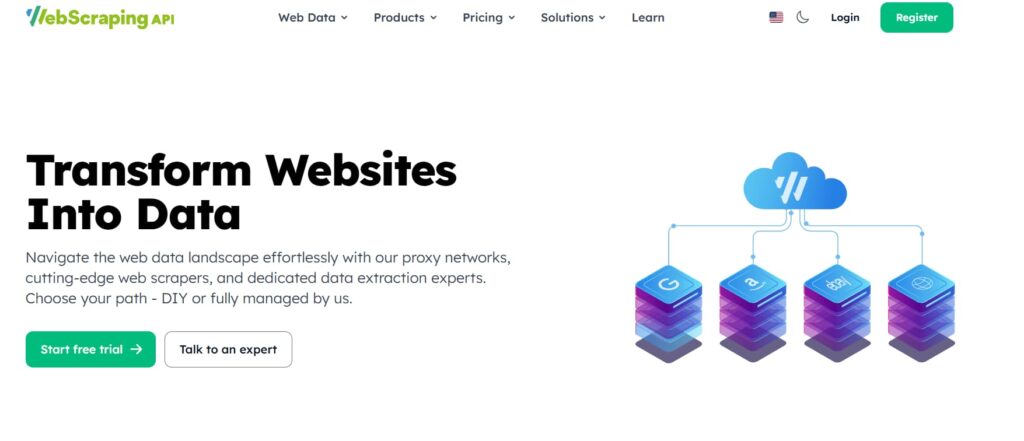
WebScrapingAPI occupies the middle ground between dead-simple tools and complex infrastructure platforms. Their API handles proxy rotation, browser rendering, and request management while maintaining enough flexibility to adapt to different scraping scenarios. The platform targets growth-stage projects that started small but need room to scale.
This balanced positioning suits teams that anticipate expanding their scraping operations beyond the initial scope. The API scales without requiring fundamental architectural changes or migrations to different platforms when requirements evolve beyond basic capabilities.
Balanced Approach to Scraping
Too much simplicity limits how far you can scale. Extreme configurability delays time-to-value. The space between these poles serves teams that need production reliability without building a scraping infrastructure from scratch. An API that starts simple and scales smoothly prevents painful migrations when project requirements grow.
WebScrapingAPI provides this balance through:
- API-based scraping;
- Proxy rotation;
- Rendering support;
- Scalable requests.
Versatility matters for projects that anticipate evolving requirements but can’t afford to switch platforms mid-stream when current tools hit their limitations.
Best Fit Scenarios
WebScrapingAPI fits mid-level projects with growth trajectories that demand scalable infrastructure. Teams that need more than basic tools but less than enterprise platforms will find this balance practical. The approach serves organizations transitioning from ad-hoc scraping toward production-grade data pipelines.
What to Consider Before Choosing an API
API selection should reflect actual production conditions rather than impressive demo results or feature comparison charts. The correct choice for a small monitoring project looks nothing like the correct choice for massive-scale extraction feeding critical business systems. Testing candidates against real target websites under realistic load reveals differences that specification pages never capture.
Internal engineering capacity shapes viable options significantly. A platform requiring extensive configuration delivers more control but demands resources that smaller teams simply lack. The sweet spot sits where API complexity matches your team’s ability to manage it without becoming a distraction from actual business goals. Before choosing, evaluate:
- Level of automation needed;
- Type of target websites;
- Expected scale;
- Data format requirements;
- Internal technical resources.
These factors matter more than any vendor benchmarks or case studies.
Final Thoughts
Scraping APIs reveal their true character only after deployment, when target websites start fighting back against extraction attempts. Demo environments mask every weakness that eventually causes production outages and incomplete datasets. Stable infrastructure matters more than feature count when pipelines run at scale. Deep automation reduces the maintenance burden that builds up over time.
Scalability determines whether today’s solution survives tomorrow’s requirements or collapses under its own weight when request volumes climb. Choose tools based on production behavior under real adversarial conditions rather than controlled tests against friendly targets. The gap between those scenarios defines whether scraping becomes sustainable or turns into an endless maintenance grind that drains engineering resources.