
Companies used to see LMS as a support tool. Something for basic training and nothing more. But that changed. Now these systems handle onboarding, compliance tracking, and performance reviews. They’ve become part of how businesses actually operate. And that’s exactly when things start falling apart. When the system becomes critical, the problems show up.
The real issue isn’t missing features. It’s architecture and how someone built the thing. We’ll walk through why LMS breaks, what to look for in a partner, and which companies actually know how to build systems that keep working.
The Moment LMS Turns From Tool Into Infrastructure
At first, an LMS does simple stuff. Courses. Basic reports. Nothing too demanding. Then the company grows. New teams appear across different regions. Compliance gets stricter. Suddenly the LMS affects business processes instead of just supporting them. It’s no longer a nice-to-have.
This transition catches most organizations off guard. The system faces loads its designers never planned for. The shift changes everything about how you use the platform. What changes when LMS becomes business-critical:
- User roles become more complex across departments and regions;
- Compliance requirements introduce strict tracking and reporting;
- Integration with HR, CRM, and internal tools becomes mandatory;
- Data consistency and accuracy start affecting real decisions;
- System performance directly impacts employee workflows.
This is where most LMS platforms start showing their limits.
Why Most LMS Architectures Fail Under Real Load
Most LMS products grow up as isolated systems. Someone built them expecting predictable traffic patterns. But real businesses don’t grow that way. Growth happens in bursts. New users show up overnight. New requirements appear mid-quarter.
The same problems keep coming up across different companies and different platforms. According to our analysts, the weaknesses follow a pattern. The most common architectural weaknesses in LMS systems:
- Monolithic structure that limits scalability;
- Weak integration with external systems and APIs;
- Lack of real-time analytics capabilities;
- Rigid role and permission models;
- Problems with content updates and delivery at scale.
These limitations turn the LMS into a bottleneck rather than a solution.
What Companies Get Wrong When Choosing an LMS Partner
Feature lists look impressive. They sell well in demos. But features don’t tell you whether a system survives growth. Most companies pick platforms based on what they see upfront. That’s a mistake. Architecture matters more than any checklist.
We’ve watched the same errors repeat across dozens of projects. Maybe it’s human nature to focus on the visible stuff. Common mistakes when selecting LMS vendors or development teams:
- Focusing on features instead of system architecture;
- Ignoring integration complexity during early planning;
- Underestimating data and analytics requirements;
- Choosing short-term implementation over long-term scalability;
- Treating LMS as a standalone product instead of infrastructure.
These decisions create problems that only show up when it’s too late to easily fix them.
7 Companies That Build LMS Systems With Scale in Mind
The list below shows different engineering approaches to LMS. Some focus on AI. Others specialize in enterprise compliance. All of them build for scale rather than patching problems later.
1. Geniusee
Geniusee launched in 2017. The team now has 300+ engineers across global offices. They’ve delivered 180+ projects for clients worldwide. Their focus on EdTech runs deep, plus AI and data-driven development. They offer custom LMS development for companies needing tailored solutions rather than off-the-shelf products. The company brings serious technical weight: AI and data science teams, AWS Advanced Tier partnership, Databricks integration for analytics. Their enterprise approach means building for scale from day one.
How Geniusee Designs LMS as a System
Geniusee treats LMS as part of a connected system, not an isolated product. They build data flows between HR, CRM, and learning platforms. Their engineers focus on making everything work together without friction. The result handles growth without constant rebuilding. Core strengths behind Geniusee’s LMS development approach:
- Custom architecture aligned with business workflows;
- AI-driven personalization and automation features;
- Cloud-native infrastructure built on AWS;
- Strong DevOps and MLOps practices;
- Enterprise-grade testing and security standards.
This combination matters when your LMS needs to handle millions of daily interactions without breaking.
Where This Approach Works Best
Best suited for enterprise clients, EdTech companies, and organizations with complex integration requirements across multiple internal systems.
2. Sana Labs
Sana Labs built an AI-first LMS from the ground up. Personalization drives everything they do. The platform learns from user behavior and adjusts content accordingly. Data-driven training means less manual work for administrators. Their approach works well for companies willing to trust AI with learning paths.
AI-Driven Learning Infrastructure
Sana’s platform puts machine learning at the center. Content recommendations improve over time. Adaptive paths mean each user sees different material based on what they already know. The architecture supports cloud scaling. Key capabilities include:
- AI-based content recommendations that improve with use;
- Adaptive learning paths for individual users;
- Data-driven insights for administrators;
- Scalable cloud architecture for growing user bases;
- Enterprise integrations with existing tools.
For companies wanting automation, Sana delivers without constant manual tuning.
3. Valamis
Valamis targets enterprise customers with heavy compliance needs. Their analytics capabilities go deeper than most competitors. Reporting tools handle regulatory requirements across multiple jurisdictions. The platform works well for heavily regulated industries like finance and healthcare.
Data and Compliance Focus
Valamis built their reputation on tracking and reporting. You can audit almost anything. The system maintains records for years if needed. Integration with enterprise HR tools comes standard. Key features include:
- Advanced analytics and reporting for compliance teams;
- Compliance tracking systems with audit trails;
- Integration with enterprise HR and business tools;
- Scalable platform design for global deployments;
- Learning experience optimization tools.
This works best when you need proof of training for regulators.
4. Fuse Universal
Fuse takes a different angle. They focus on knowledge sharing rather than formal courses. User-generated content plays a big role. Employees contribute what they know. The platform becomes a living ecosystem rather than a static course library.
Learning Beyond Courses
Fuse assumes learning happens everywhere, not just in assigned modules. Their system captures informal knowledge. Experts share what they know. New employees learn from peers rather than just HR materials. Key capabilities include:
- Knowledge sharing systems for capturing expertise;
- User-generated content from employees;
- Integration with daily work workflows;
- Continuous learning models without fixed endpoints;
- Scalable delivery for global teams.
This works for organizations where peer learning matters more than formal training.
5. 360Learning
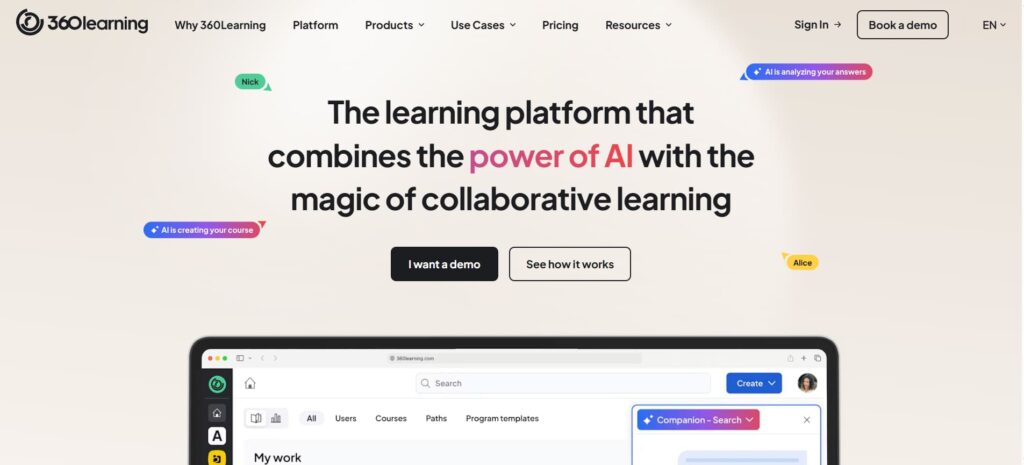
360Learning built their platform around collaboration. Peers create content for peers. Subject matter experts own their material. The platform makes it easy to update and improve courses over time. Feedback loops keep content relevant.
Collaborative Learning Systems
The platform treats learning as a social activity. People learn from each other. Content evolves based on what works. Administrators spend less time creating courses and more time facilitating. Key features include:
- Peer-driven learning models and workflows;
- Collaborative content creation tools;
- Analytics and feedback loops for continuous improvement;
- Integration capabilities with existing systems;
- Scalable architecture for growing organizations.
This suits companies where internal expertise matters more than external content.
6. Cornerstone OnDemand
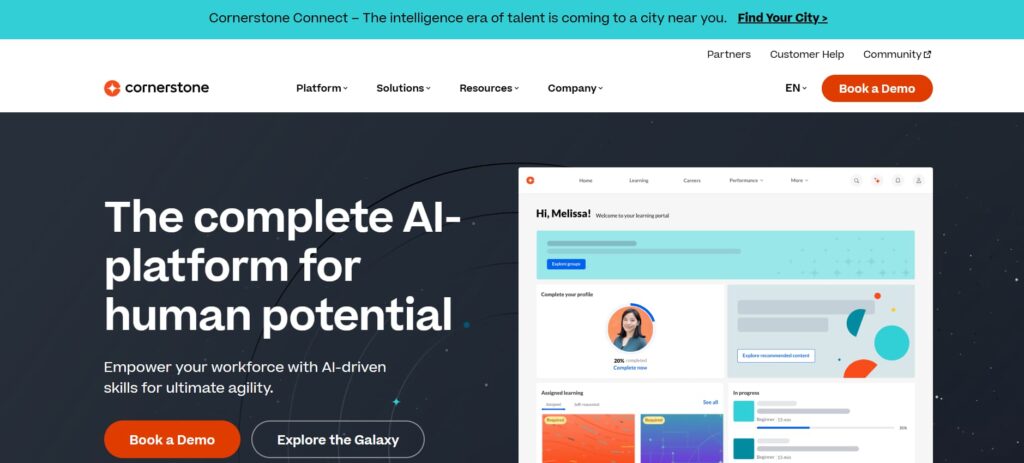
Cornerstone plays in the enterprise space. Their LMS connects deeply with HR systems. Talent management and learning live in the same ecosystem. Reporting covers both compliance and performance. The platform handles millions of users across global deployments.
Enterprise Learning at Scale
Cornerstone built for big organizations. Multiple business units. Different compliance rules by region. Complex reporting requirements. The platform manages all of it from a single instance. Key capabilities include:
- Enterprise LMS infrastructure for global companies;
- Compliance and reporting across jurisdictions;
- Integration with HR and talent management systems;
- Global scalability for millions of users;
- Data analytics for business intelligence.
This works when you need one system for everything HR and learning related.
7. LearnUpon
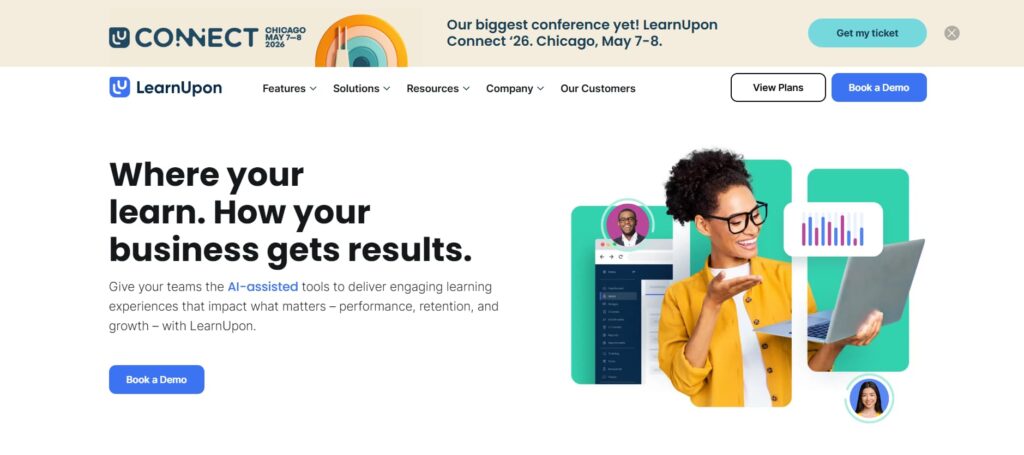
LearnUpon targets mid-market companies with enterprise ambitions. Their platform scales without becoming overly complex. Multi-tenant architecture means managing multiple audiences from one place. Deployment takes weeks rather than months.
Flexible LMS for Growing Teams
LearnUpon balances features with simplicity. You get enterprise capabilities without enterprise complexity. The platform grows as you grow. New features appear regularly without disrupting existing workflows. Key capabilities include:
- Multi-tenant LMS architecture for different audiences;
- Scalable user management across teams;
- Integration options with common business tools;
- Reporting tools for tracking progress;
- Easy deployment without long implementation cycles.
This suits companies that want to start fast and scale later without rebuilding.
How to Choose an LMS Partner That Will Not Break Later
Partner selection shapes your LMS future more than any feature decision. Pick wrong and you rebuild in two years. Pick right and the system grows with you. The difference shows up in maintenance costs and how fast you can add new capabilities.
We recommend evaluating potential partners against specific technical criteria. Past LMS work matters. So does experience with systems at your expected scale. Key criteria to evaluate before choosing a partner:
- Proven experience building scalable systems, not just implementing them;
- Integration capabilities with HR, CRM, and analytics tools;
- Cloud expertise across AWS, Azure, or GCP platforms;
- Data engineering and analytics skills for reporting;
- Long-term support model and willingness to maintain what they build.
Take your time here. The right partner pays for itself within the first year.
Final Thoughts
LMS is infrastructure now. Not a nice add-on. Not a training tool you forget about. Architecture determines whether yours survives growth. Most fail because no one planned for what happens next. Find a partner who understands product engineering, not just feature delivery. That choice makes all the difference.